
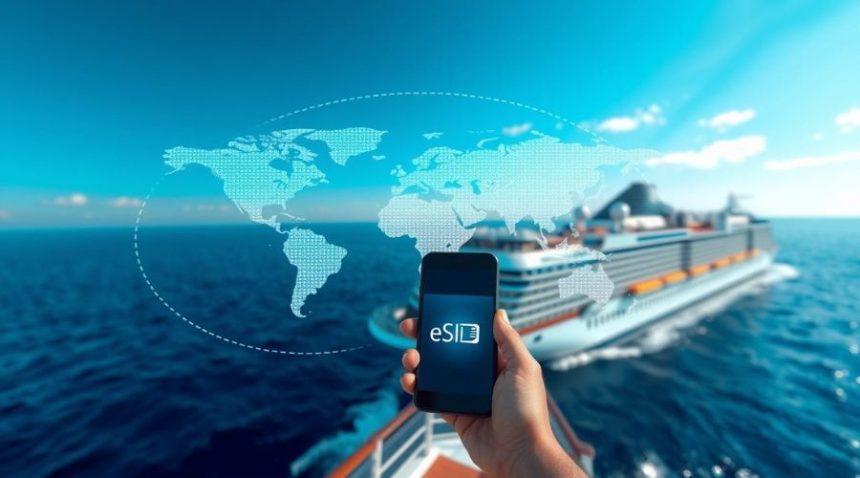
eSIMs only work once your ship is docked, since they rely on land-based cell towers. The smartest setup is simple—use a regional Airalo eSIM for all ports, switch it on only when you reach land, and rely on ship Wi-Fi during sea days. Cruise connectivity is not about one perfect plan, but the right split between land and ocean.
Cruise itineraries often pack five or six countries into a single week, with barely enough time to step off the ship before the next departure notice starts blinking. That’s where Airalo becomes especially useful—not as a “miracle at sea,” but as a reliable digital bridge the moment land reappears.
Why Cruise Connectivity Works Differently (and Where Airalo Fits In)
An eSIM—including Airalo’s—does not connect via satellites. It connects only to local mobile towers, which completely changes how cruise internet behaves.
Here’s how it actually works during a cruise day:
- In port: Airalo eSIM connects instantly to local networks, just like a local SIM
- Just offshore: signal fades as the ship moves beyond coastal tower range
- Open sea: no eSIM works (Airalo or any other provider)
- Next port: Airalo reconnects automatically when the ship reaches land
This is not a limitation of Airalo—it’s simply how global mobile networks are built. Cell towers only cover a few miles out to sea, which is why cruise ships switch to satellite systems once they leave port.
At the port itself, Airalo delivers standard 4G LTE speeds (often 30–80 Mbps in strong regions), which is more than enough for:
- Video calls
- Google Maps navigation
- Uploading photos and reels
- Ride-hailing apps and bookings
Meanwhile, at sea, only ship Wi-Fi works—but it is often slow and expensive. That’s why experienced cruisers don’t try to “replace” ship Wi-Fi with eSIMs. Instead, they use Airalo for land moments where real life actually happens.
A hidden benefit: Airalo also helps avoid battery drain. Phones constantly searching for a signal at sea can lose power quickly. Turning on airplane mode while offshore and reactivating Airalo at port keeps both battery and sanity intact.
Airalo as the Core Cruise Connectivity Tool (Not Just an eSIM Option)
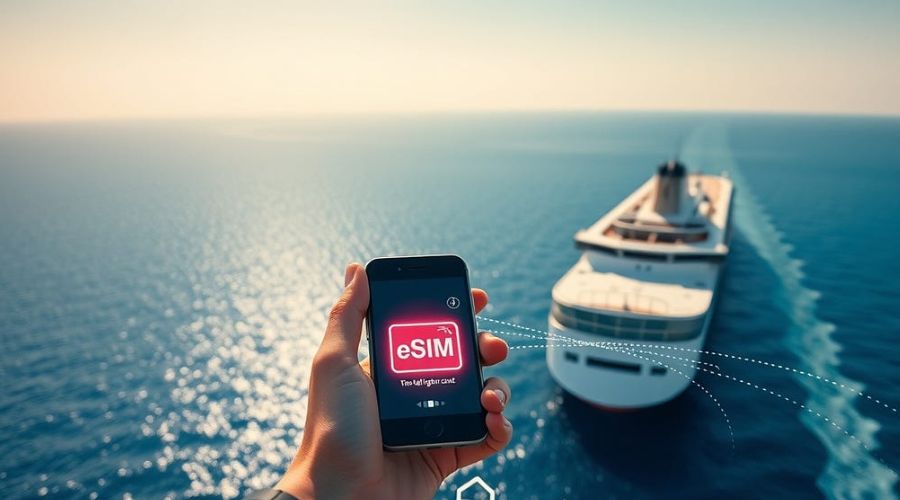
Airalo works well for cruise travel because it matches the structure of cruising itself: short land stops, multiple countries, and constant reconnection.
Instead of managing multiple SIM cards or buying new plans in every country, Airalo allows one installation before departure. That single setup becomes the base for all port connectivity across the journey.
The strongest advantage is regional structure. Cruises rarely stay in one country. A Mediterranean route might include Italy, Greece, Croatia, and Spain within a week. A Caribbean cruise might move between several island nations. Airalo’s regional packs are designed exactly for this kind of travel pattern, reducing constant switching.
Simplicity is another major factor. Cruise passengers don’t have time to troubleshoot connectivity during short port visits. Airalo stays inactive until needed, then activates instantly when land networks appear. There is no paperwork, no SIM swapping, and no need to hunt for local stores.
It also solves one of the biggest cruise problems: unpredictable roaming charges. Instead of variable billing after every port, Airalo offers fixed data packs with clear validity, making spending predictable across the entire trip.
Regional Coverage That Matches Cruise Routes
Airalo fits naturally into cruise geography because its coverage aligns with the most common sailing regions.
In the Mediterranean, coverage is strong across Italy, Greece, Spain, and Croatia, where ports are close to well-developed urban networks. Connectivity is usually fast and stable.
In the Caribbean, performance is generally reliable across major stops like Nassau and Cozumel, though smaller islands may vary depending on local infrastructure. Even then, service typically improves quickly near port areas.
Northern Europe cruises, including Norway, Sweden, and Denmark, also offer solid connectivity, though fjord-heavy routes can sometimes create brief weak zones near water-surrounded landscapes.
Remote routes such as Alaska are more variable. Major ports still provide usable coverage, but terrain and distance from cities can affect signal strength, so offline maps are often useful alongside Airalo.
How to Use Airalo on a Cruise Without Overthinking It
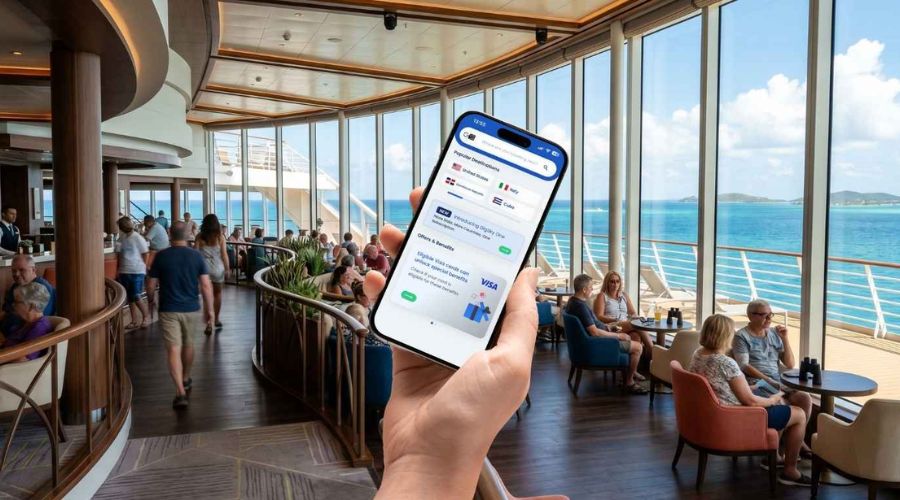
The setup is intentionally simple.
Before departure, Airalo is installed at home where there is no rush or connectivity pressure. Once installed, it stays dormant until the first port.
At the first stop, it is activated and used as the main data connection. Everything works normally—maps, messaging, browsing, and uploads feel like standard land travel.
When the ship leaves port, Airalo is switched off and ship Wi-Fi takes over for sea days. There is no attempt to force mobile data offshore because it will not function.
At the next port, Airalo reconnects automatically without any manual setup. This cycle repeats throughout the cruise, keeping connectivity predictable instead of stressful.
Usage is monitored inside the Airalo app, where top-ups can be added if needed. This keeps control simple without technical adjustments.
Conclusión
Cruise connectivity works best when it follows timing, not complexity. Airalo fits into that system by handling only what matters most—fast, reliable internet at every port. It doesn’t attempt to function at sea, and that limitation is exactly what makes it effective where it actually counts. Paired with ship Wi-Fi for ocean days, it creates a practical balance between land and sea connectivity.






 Español
  English